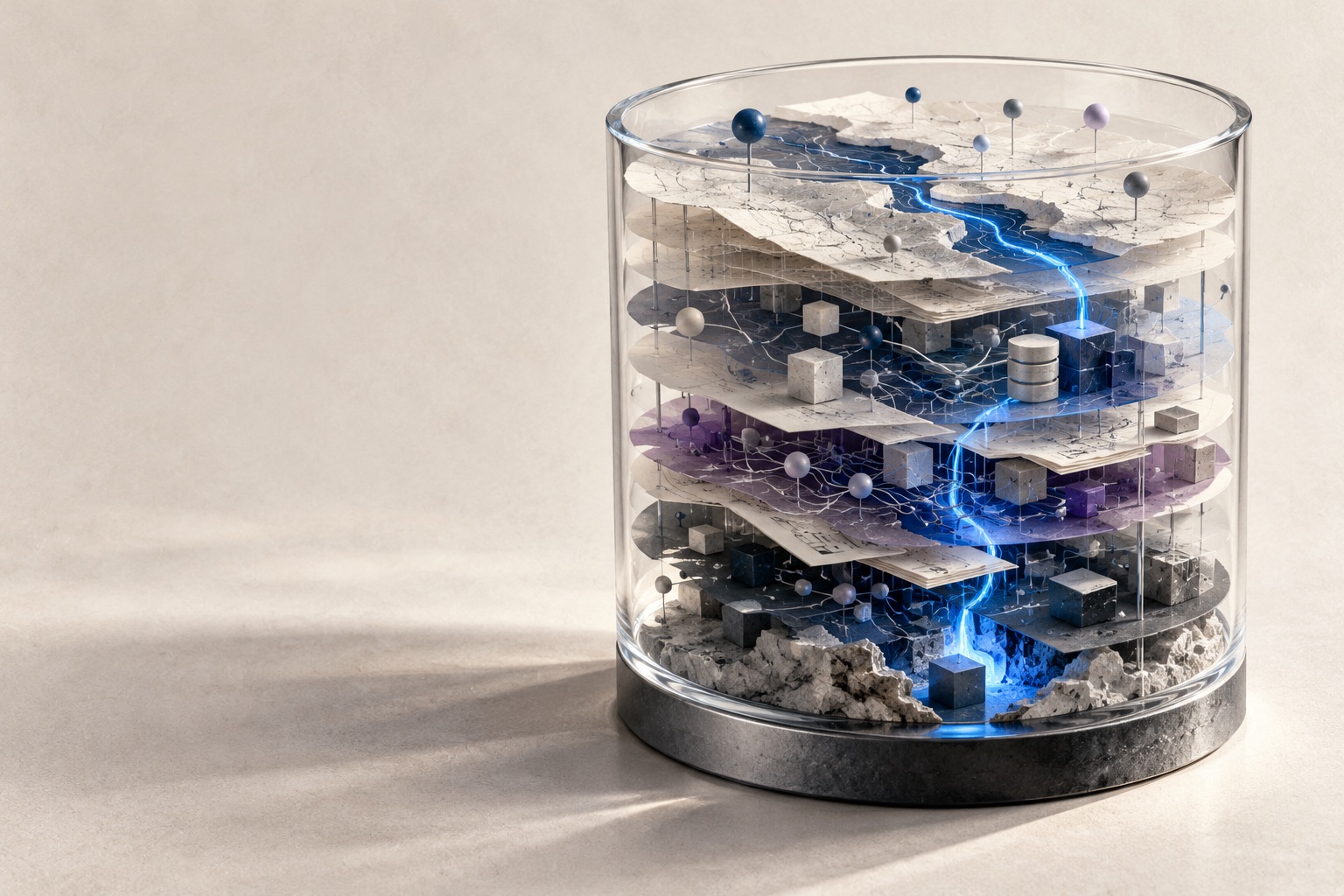
The report's headline numbers are optimistic: Anthropic says most surveyed organizations already use agents for coding, and that many plan to move toward more complex workflows. The less glamorous finding is more useful for builders: integration and data quality are among the biggest barriers.
That pattern matches what teams see when a prototype meets a real company. The model can produce a plausible answer, but the workflow still needs access to the right context, a stable system of record, an approval path, and a way to recover when the source data is incomplete.
Context is a product decision
A team does not “add context” at the end. It decides which records are trustworthy, how they are joined, how stale data is labeled, and what the agent is forbidden to infer. Those decisions are product design, not prompt polish.
For a small AI-built product, the scope implication is straightforward: pick a narrow workflow with a clear source of truth. A smaller agent with an honest evidence trail beats a broad assistant that sounds confident while stitching together stale or incompatible inputs.
The fastest path to a credible AI product is usually less surface area and better context.
What to show in public
A project page should make the context visible: what the product reads, what it changes, where a human reviews it, and how the creator knows it works. Those details are more valuable than another list of model names.
The report is based on a survey of more than 500 technical leaders conducted with Material in late 2025.
Anthropic · The 2026 State of AI Agents Report ↗