An agent can be prompted to ignore a rule. If its only boundary is another piece of text in the prompt, that boundary lives inside the same space the agent is trying to control. Filesystem, network, and credential access therefore cannot be left only to model behavior.
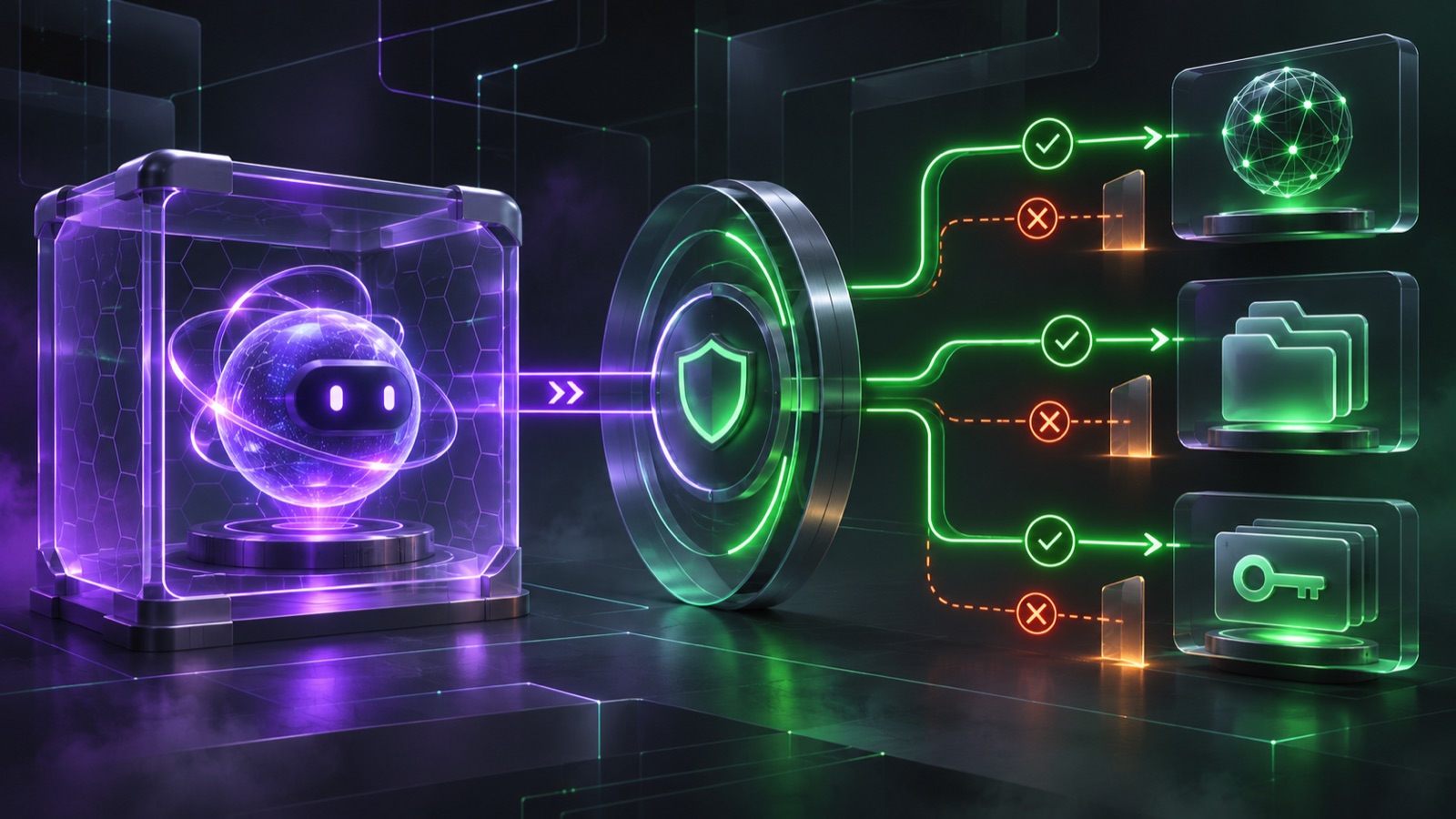
CNCF says NVIDIA contributed OpenShell as a Sandbox to the foundation's open governance. The project describes a runtime for autonomous agents that puts enforcement of policy and access to resources outside the agent process.
Policy outside the process
OpenShell's published description starts with a sandbox that has no direct network access, limited privileges, and a gateway or supervisor for sensitive operations. Cedar is used as the policy language, while a policy prover is meant to check policy consistency. Allow and deny decisions are designed to be reviewable after the fact.
That boundary is useful because the same control layer can cover different models and agent harnesses. It also moves work into policy design, operations, and testing. A sandbox is not a substitute for a threat model.
The strongest boundary is the one the agent cannot edit with another prompt.
Audit first
For builders, start with one concrete workflow. Deny by default, define filesystem, network, and credential rules, test policy updates, and keep a decision log. OpenShell is a proposal for an agent control plane; a real deployment still has to show what it permits and what it stops.
CNCF says NVIDIA contributed OpenShell as a Sandbox to CNCF's open governance. The runtime is described as enforcing agent policy outside the agent process and adopting Cedar; NVIDIA's companion material describes deny-by-default access, live policy updates, and auditable decisions. These are project claims, not an independent security audit.
CNCF · Welcoming OpenShell ↗