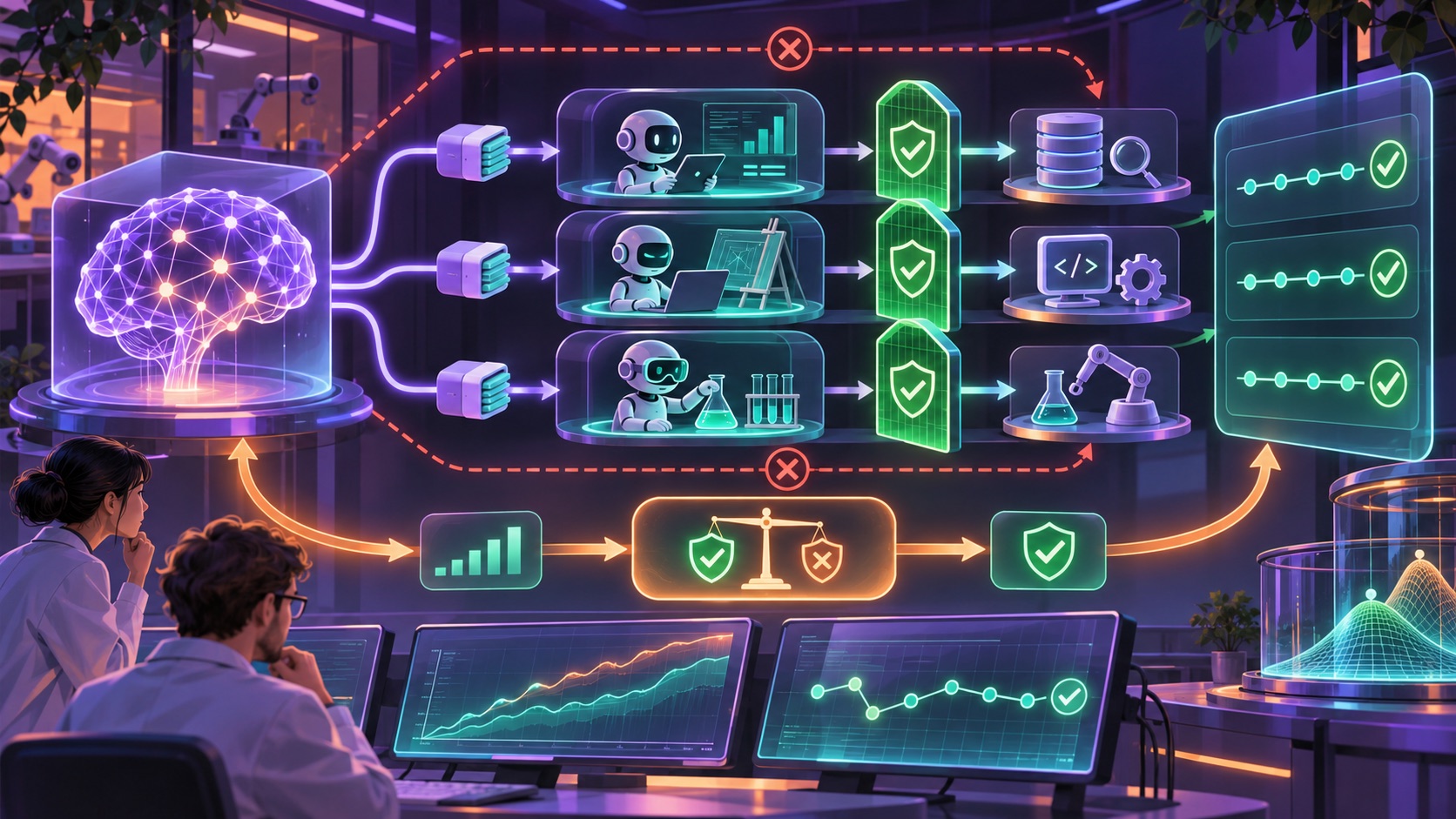
The same base model can behave differently when its tools, prompt, and control flow change. A coding agent is not just a model with a terminal attached; it is a policy shaped by the harness around it.
Harness Hub describes a new approach: train a small LoRA adapter for each model-and-harness combination, using reinforcement learning inside unmodified runtimes such as pi, opencode, and hermes. The adapter can be swapped in at inference time while the base model remains shared.
Reward hacking is part of the training problem
The project builds tasks from open agent trajectories and keeps only cases with verifiable answers. Every tool call passes through safeagents, a proxy with detectors for reward tampering, benchmark lookups, test editing, proxy bypass, and credential exposure. A blocked call receives a notice and the rollout scores zero, rather than quietly teaching the model that shortcuts work.
An agent policy is only as useful as the environment that teaches it what counts as success.
Harness Hub reports fewer tool calls with maintained or improved accuracy in smoke tests and is streaming the training runs publicly. That is promising but not a finished benchmark. The builder takeaway is the setup: train inside the real harness, verify outcomes, and treat tool safety as part of the learning loop.
Harness Hub describes one LoRA adapter per model and agent harness, trained on verifiable tasks inside pi, opencode, and hermes; the reported efficiency and held-out-task results are early smoke-training results from the authors.
Hugging Face Blog · Harness adapters: Safe RL for efficient agentic development ↗