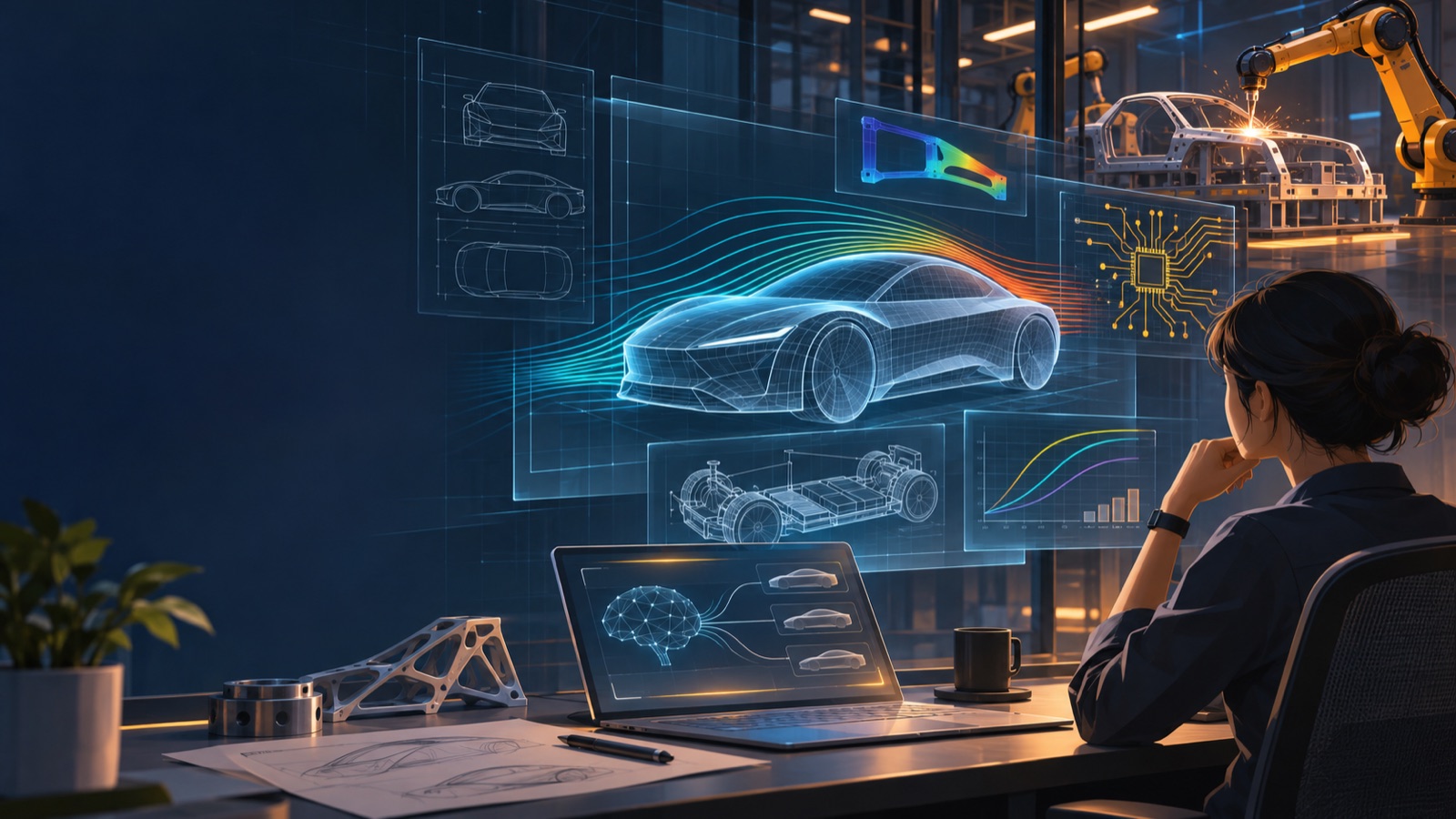
AI in engineering does not begin by replacing a person at the final decision. It begins with work that is expensive, repetitive, and scattered across drawings, simulations, code, and manufacturing constraints.
OpenAI describes teams working with Chip Ganassi Racing to turn 3D scans into editable CAD models and manufacturing drawings. With Mazda, it is exploring shapes for aerodynamics and crash safety. Engineers review both the accuracy and the manufacturability of the results.
Verification is part of the workflow
In the physical world, a model is useful only when an expert can safely verify and build what it produced.
That is a stronger signal than another demo clip. The builder has to connect the model to simulation, source data, and a person who owns the outcome. Codex can shorten the path from scan to design, but it still needs a technical contract, checkpoints, and a way to undo a change.
OpenAI describes early work with Chip Ganassi Racing and Mazda and says Codex automates routine tasks, flags inconsistencies, and helps with CAD and simulations; these are company-reported early results.
OpenAI · Accelerating engineering for the physical world ↗