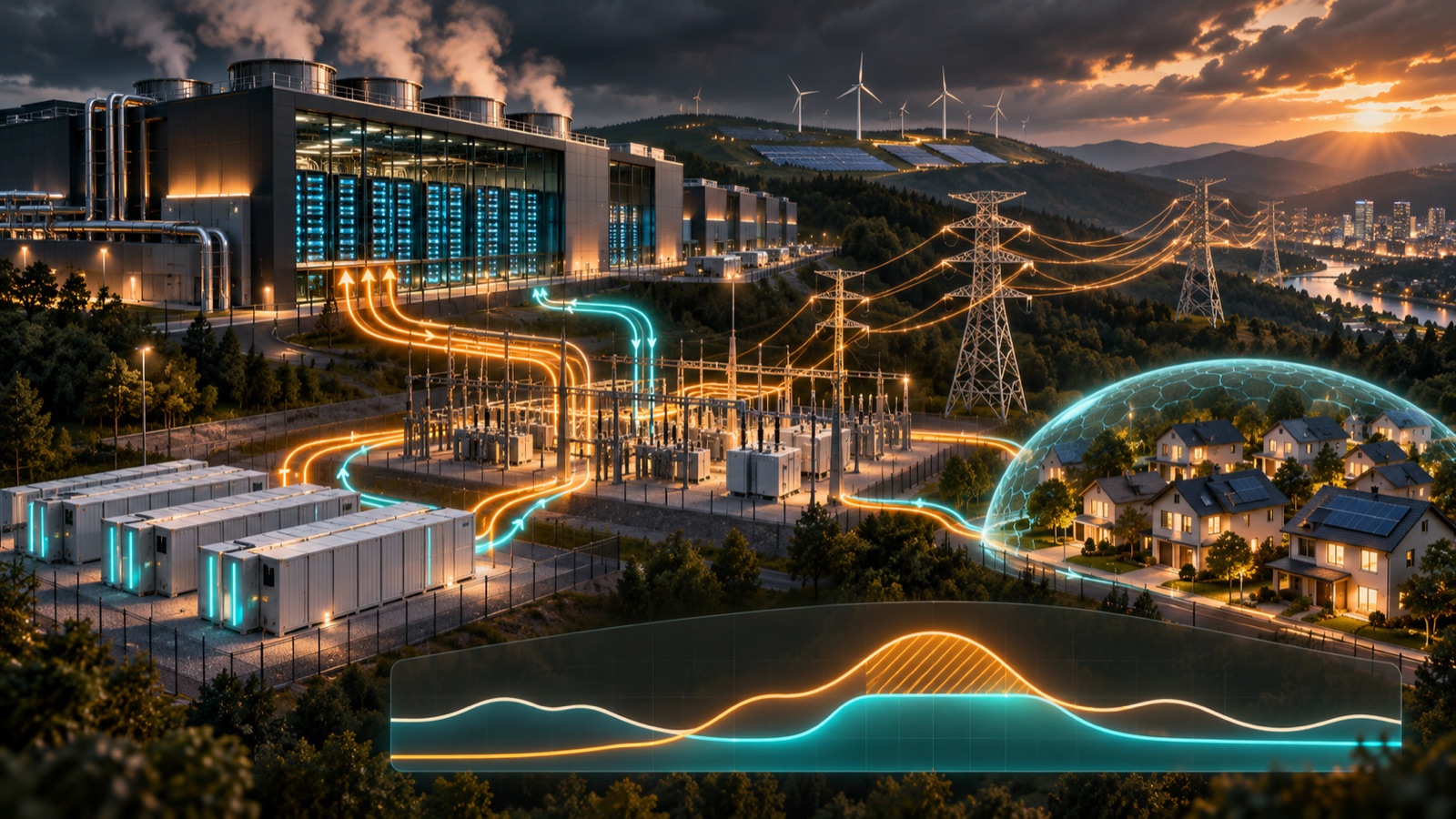
AI infrastructure is usually described in chips, models, and data centers. The less visible dependency is electricity: a campus needs a huge connection, the grid has to carry it during peaks, and the costs of reinforcing that network can land on people who never use the compute.
OpenAI's Grid Protectors program, announced November 2, proposes treating a compute campus as a flexible participant in the power system. The company says it will work with utilities, regulators, and policymakers to reduce demand when the grid is under strain, use on-site generation or storage where appropriate, and agree in advance how quickly and for how long demand can fall.
The campus becomes a grid contract
For a planned Effingham County campus, OpenAI says it has committed to pay the infrastructure and electric-service costs required for the project and agreed to up to 1,000 megawatts of flexible demand response with Georgia Power. That is a proposal and a planned project, not evidence that every future AI campus will deliver the same result.
The power contract is part of the product. Compute capacity that cannot explain its peak demand is unfinished infrastructure.
The builder lesson is concrete: plan for flexibility before the site is live, make the financial assurances explicit, and measure who benefits when demand moves. Batteries and controls do not replace new generation or transmission, but they can make a large load easier for a community to absorb.
OpenAI says future campuses will work with utilities and regulators to reduce demand during grid stress, and describes a planned Effingham County campus with up to 1,000 megawatts of flexible demand response; the savings and household-equivalent figures are OpenAI's and Georgia Power's projections.
OpenAI · Introducing the Grid Protectors Program ↗