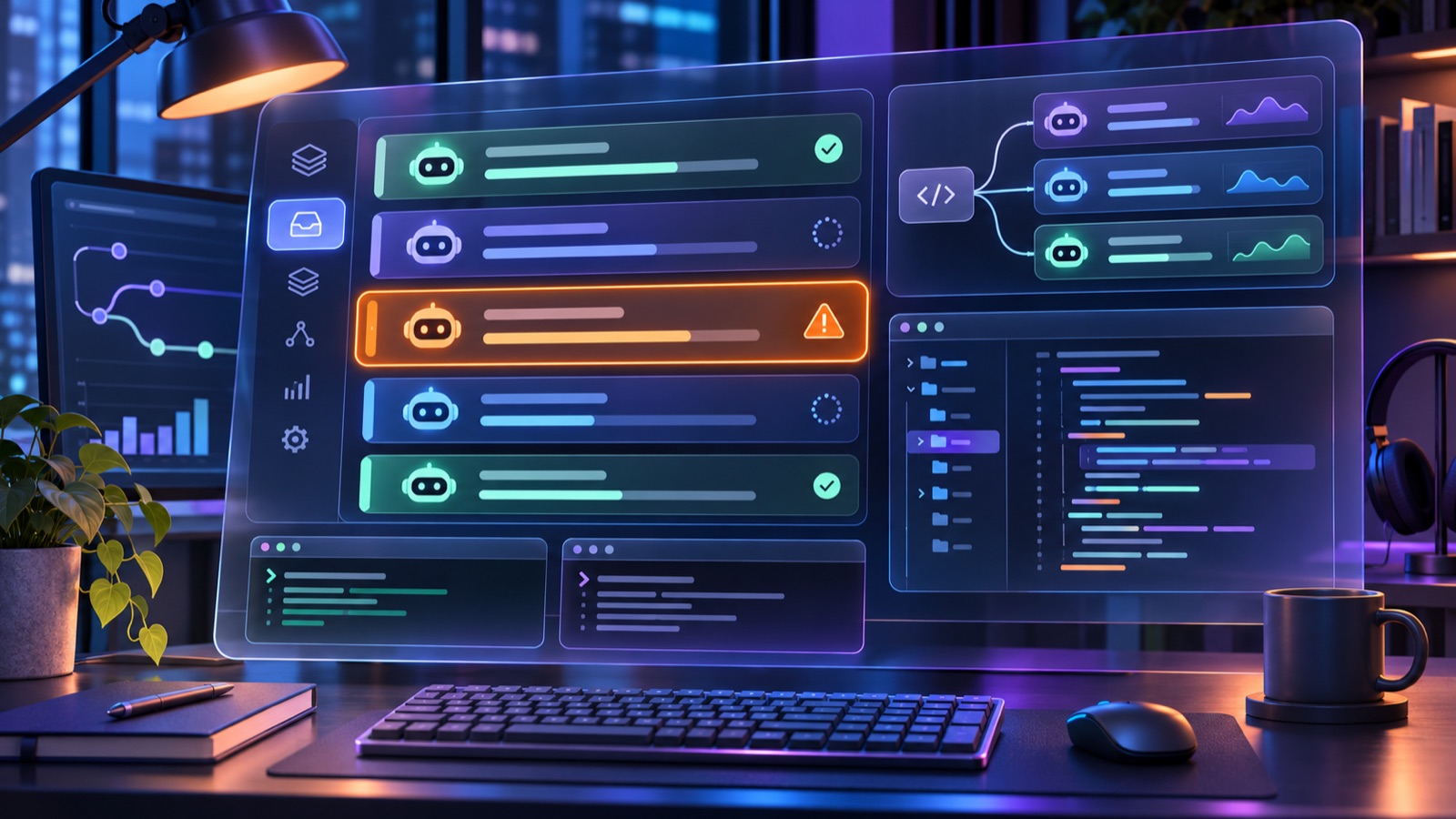
Generating a larger diff does not automatically mean shipping faster. The work that surrounds the code—agreeing on requirements, splitting tasks, reviewing changes, and understanding a production failure—can become the new bottleneck when implementation accelerates.
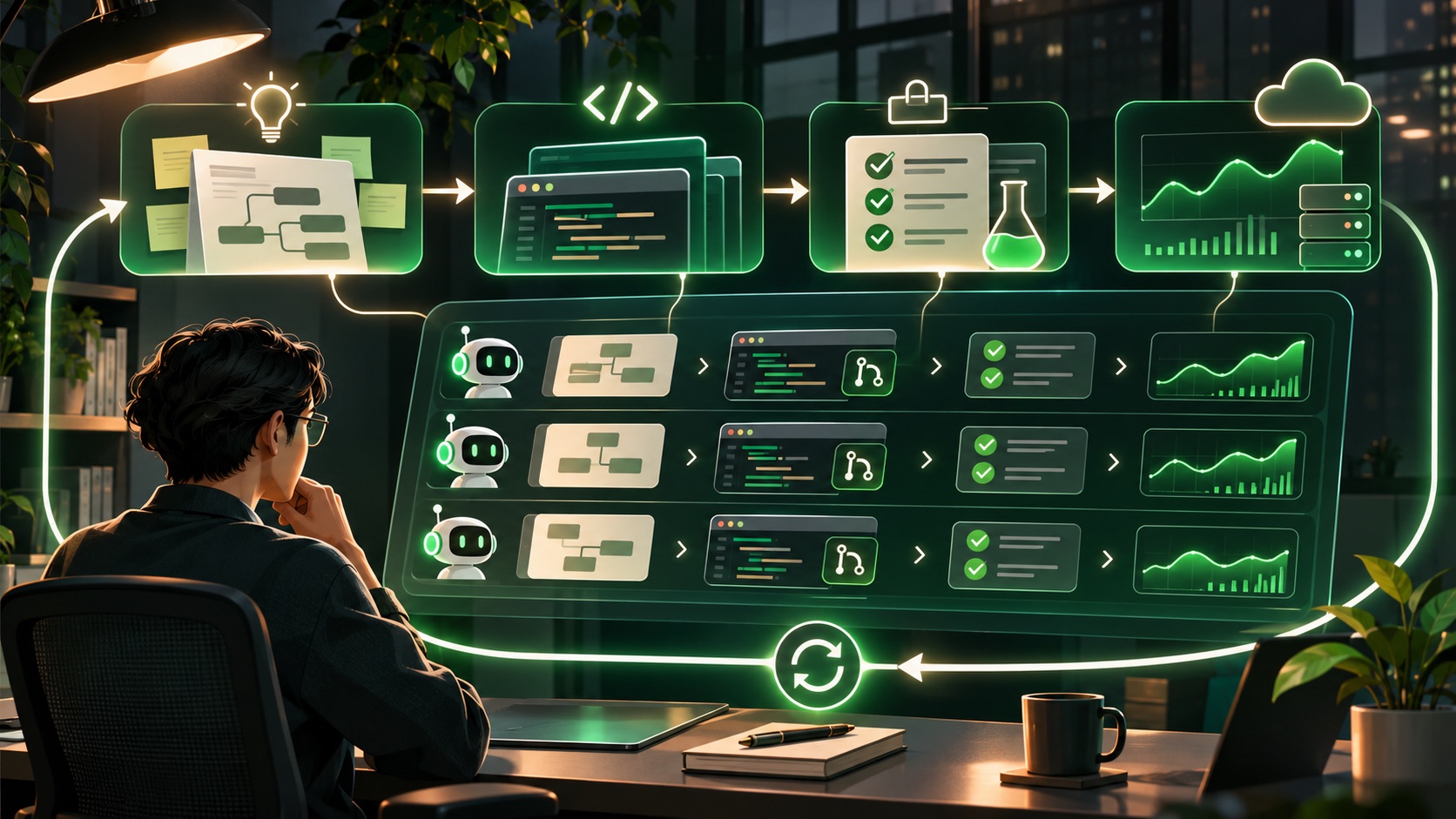
GitHub's November 6 guide frames agentic engineering as four connected stages: Plan, Build, Verify, and Observe. It points to more than 1.2 billion commits on GitHub in one October week and cites a Faros AI study that found pull requests spent 441% longer in review as teams moved from low to high AI adoption.
The agent needs a place in the whole loop
The guide's practical pattern is to gather scattered context into a reviewable plan, run separate tasks in isolated repository copies, keep project instructions available across sessions, and use smaller pull requests plus automated checks before human review. After release, connectors and issue drafting help connect telemetry and customer evidence back to engineering work.
The unit of productivity is not the generated line. It is the verified change that survives contact with the real system.
GitHub is describing its own tools, so its workflow is a product perspective rather than an independent study. Still, the diagnosis is useful for any builder: if agents increase output without improving review and observation, the team has moved the queue rather than removed it.
GitHub's November 6 guide proposes a Plan, Build, Verify, and Observe workflow and cites a Faros AI finding that pull requests spent 441% longer in review as AI adoption rose; the productivity framing and product examples are GitHub's own presentation.
GitHub Blog · Beyond code generation: A developer's guide to agentic engineering ↗